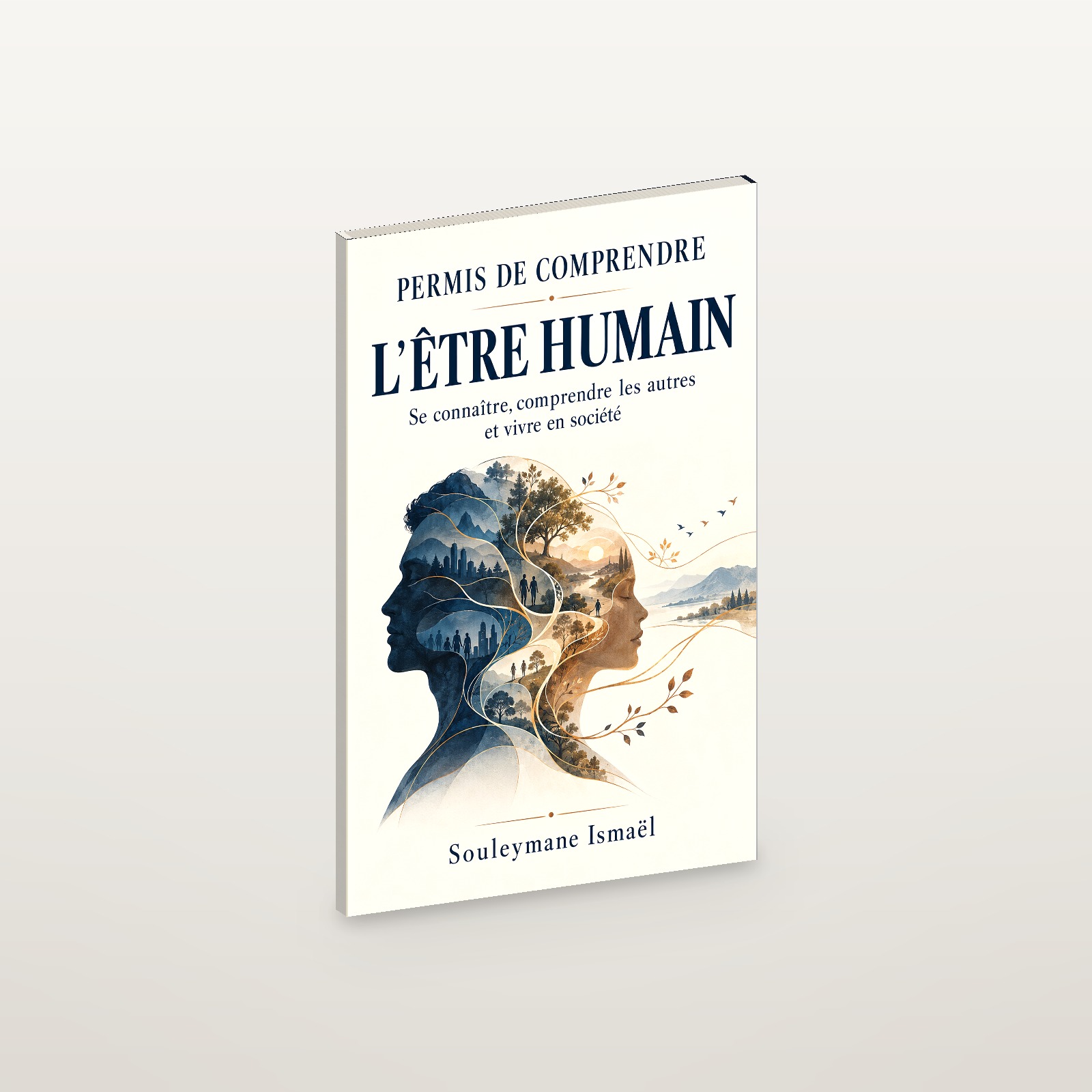
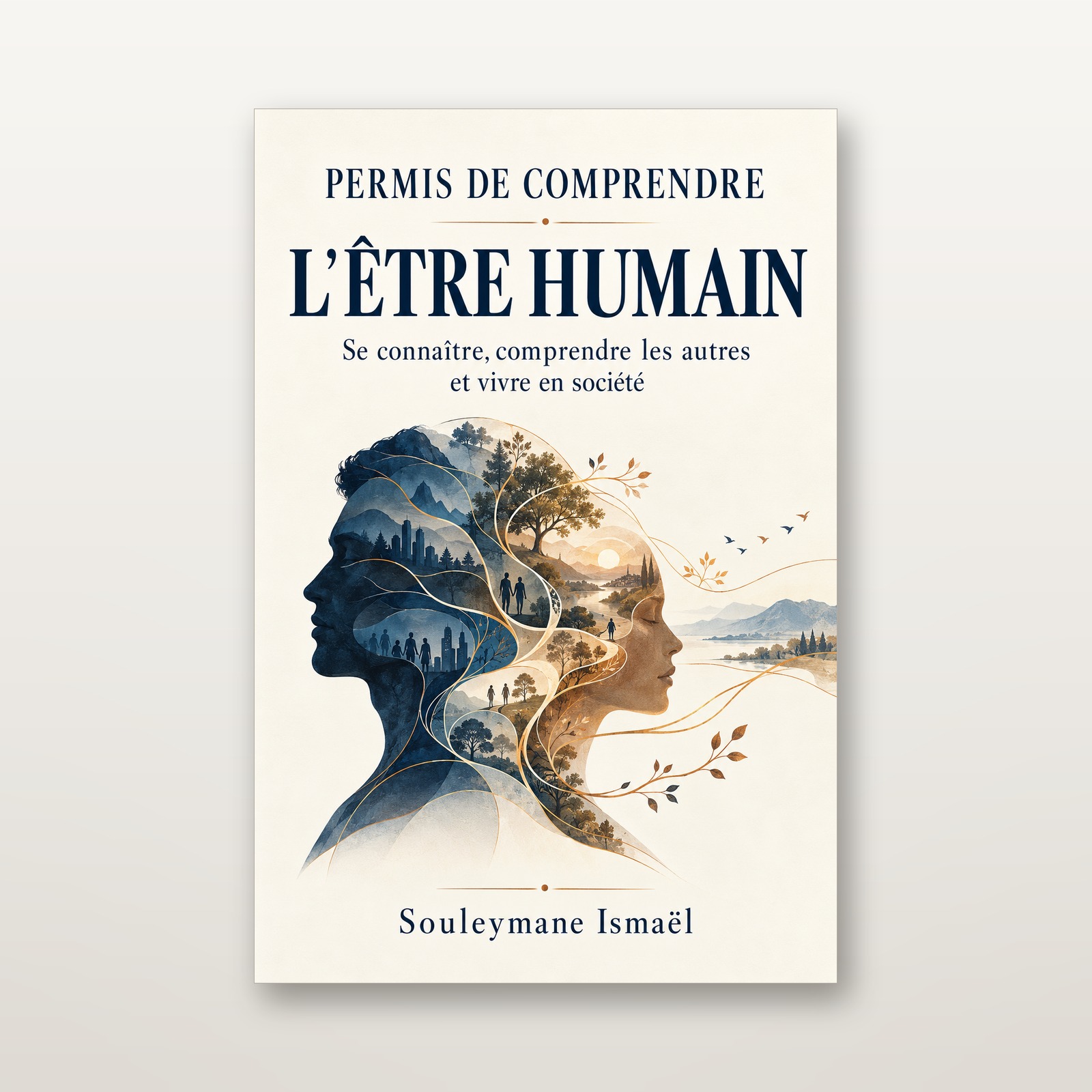
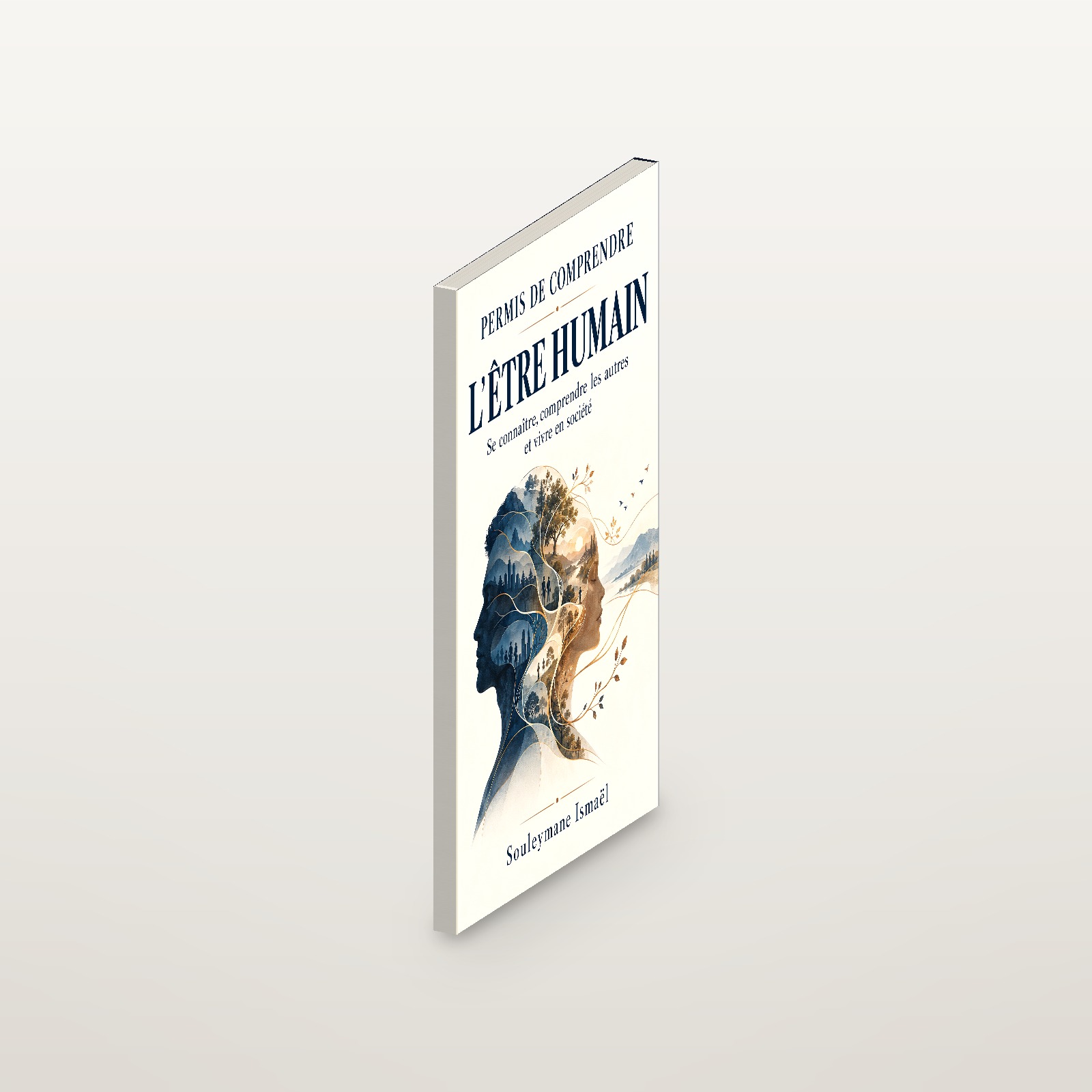
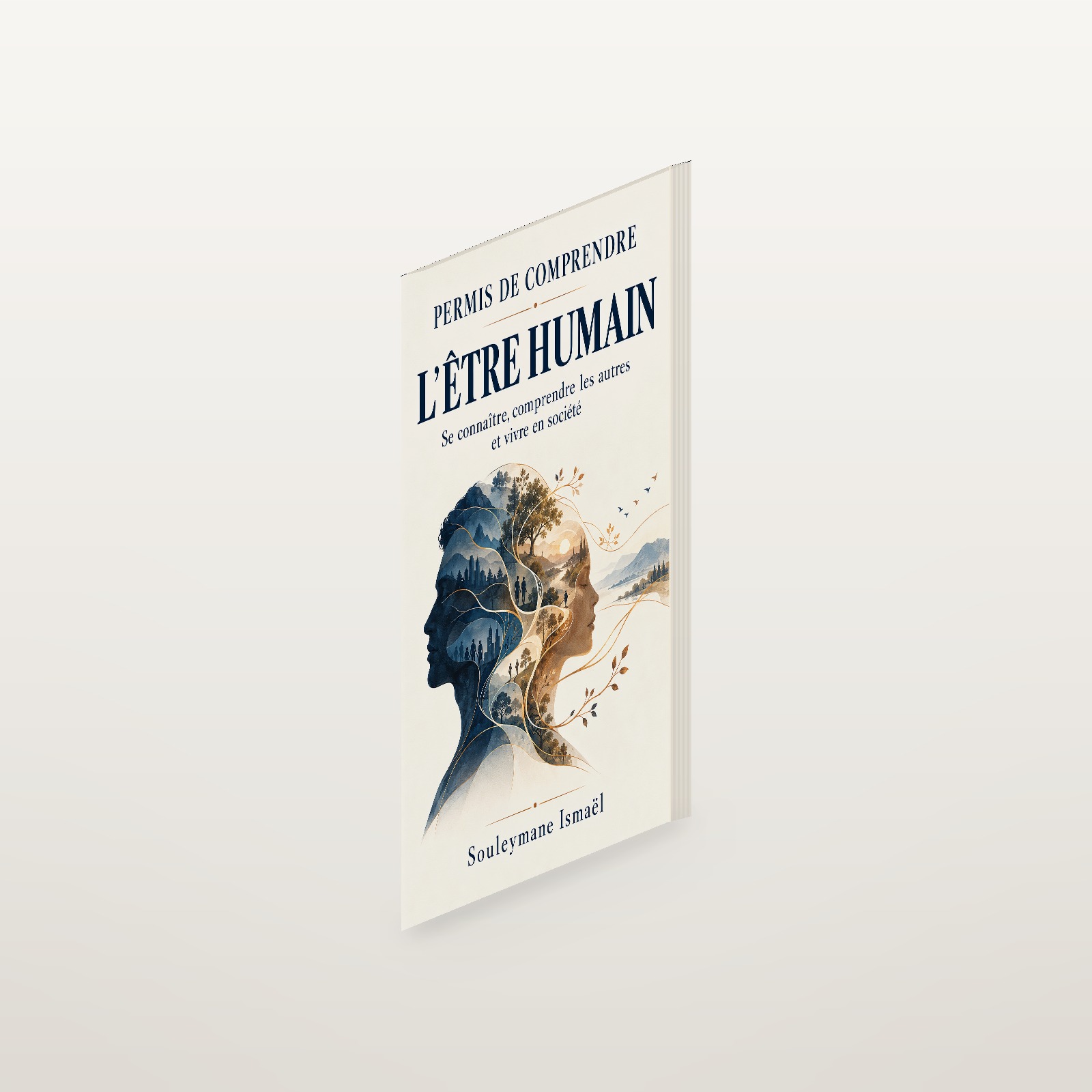
A licence to live among others
To drive, we learn the highway code and the road. To live in society, we learn a great deal, but without a syllabus: in our family, at school, at work, in our friendships and our failures. Then we set off on the road with what we have been given, and discover along the way that others were given something else.
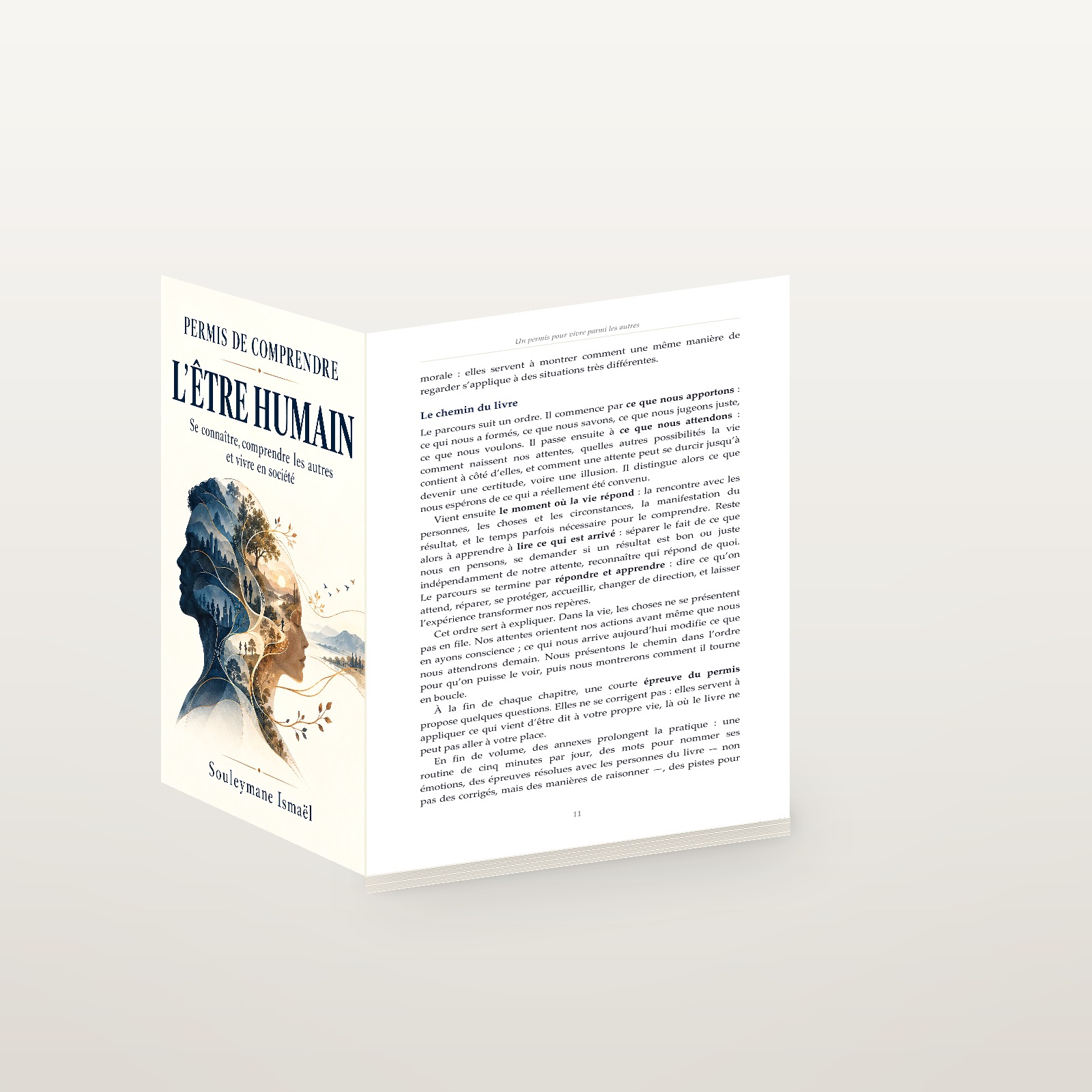
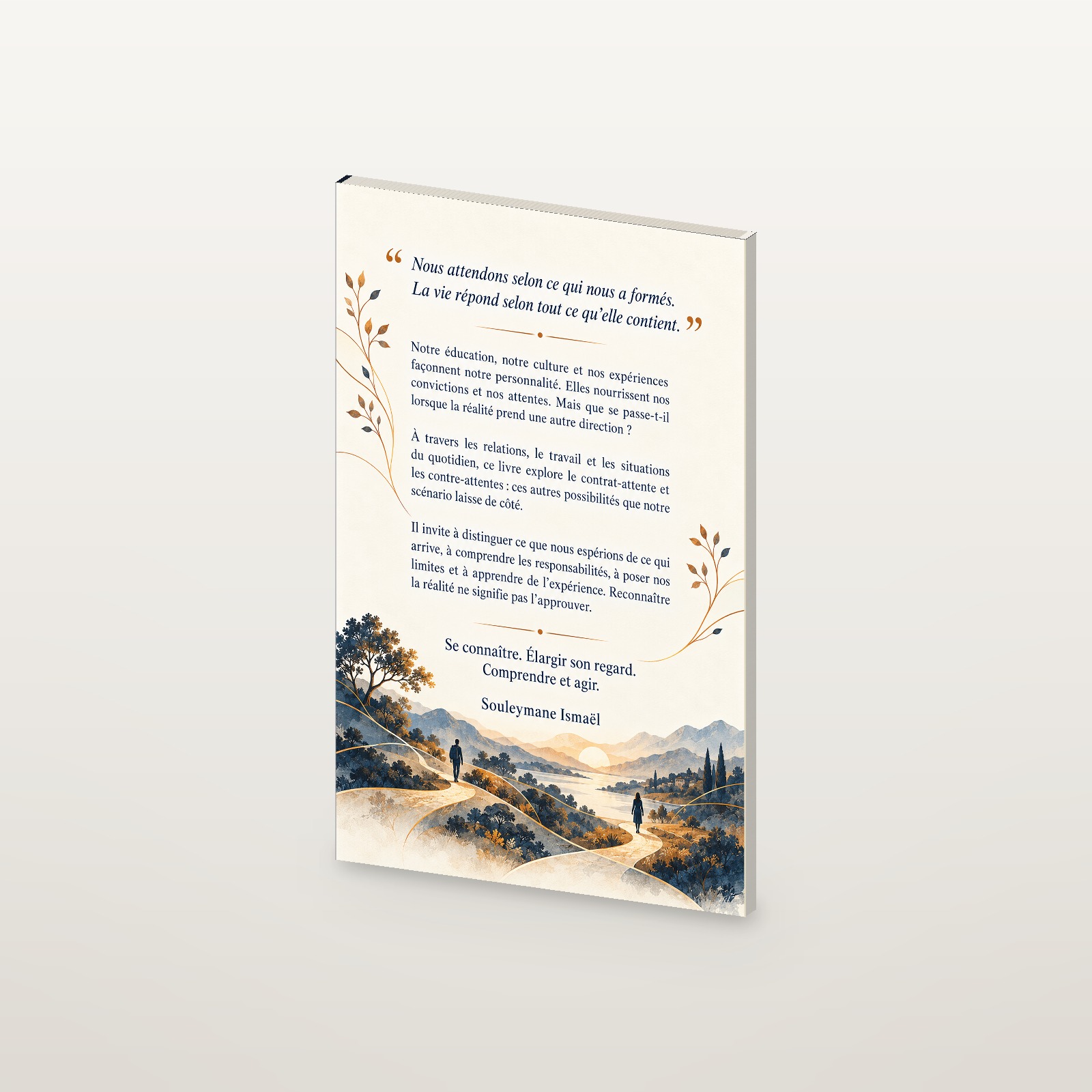
Permis de comprendre l’être humain offers this learning (in English: A Licence to Understand Human Beings). It starts from one sentence: “We expect according to what has shaped us. Life answers according to everything it contains.” Our expectations come from our upbringing, our culture, our beliefs, the people around us and our experiences. What actually happens arises from the encounter with other people, other stories and circumstances we had not foreseen.
What the book teaches
- Recognising the shape of our expectations : hope, plan, forecast, well-founded expectation, implicit demand.
- Seeing the counter-expectations, the other possibilities that life contains, and recognising that a different outcome can be good, fair or beneficial.
- Undoing the expectation-contract, the link we set up on our own between what we bring and what must follow, and understanding the “illusion muscle”.
- Telling the fact apart from what we think of it, intention from effect, what conforms from what is fair.
- Responding with discernment : saying what you expect, making amends when you have hurt someone, protecting yourself and holding others to account when there is a wrong, welcoming a good surprise, learning from experience.
The book never confuses understanding with excusing. Acknowledging what happened does not mean approving of it; enduring or keeping silent does not mean consenting; having been able to foresee a failing takes nothing away from the responsibility of the person who commits it.
A practical method
The ideas are followed through everyday situations: a façade turning grey, a leak left unrepaired despite a promise, a correction made in public, a son who takes over his father’s shop without having chosen to, two neighbours who share a garden. Each chapter ends with a licence test, to apply what has just been said to your own life.
Le chapitre 15 présente une méthode de dialogue en cinq temps, avec deux conversations complètes. Les annexes prolongent la pratique :
- a five-minute daily routine;
- words to name your emotions;
- five worked tests;
- ideas for sharing this approach with children, teenagers or a group;
- a glossary of the key ideas.
Ce que vous recevez, dans la même commande
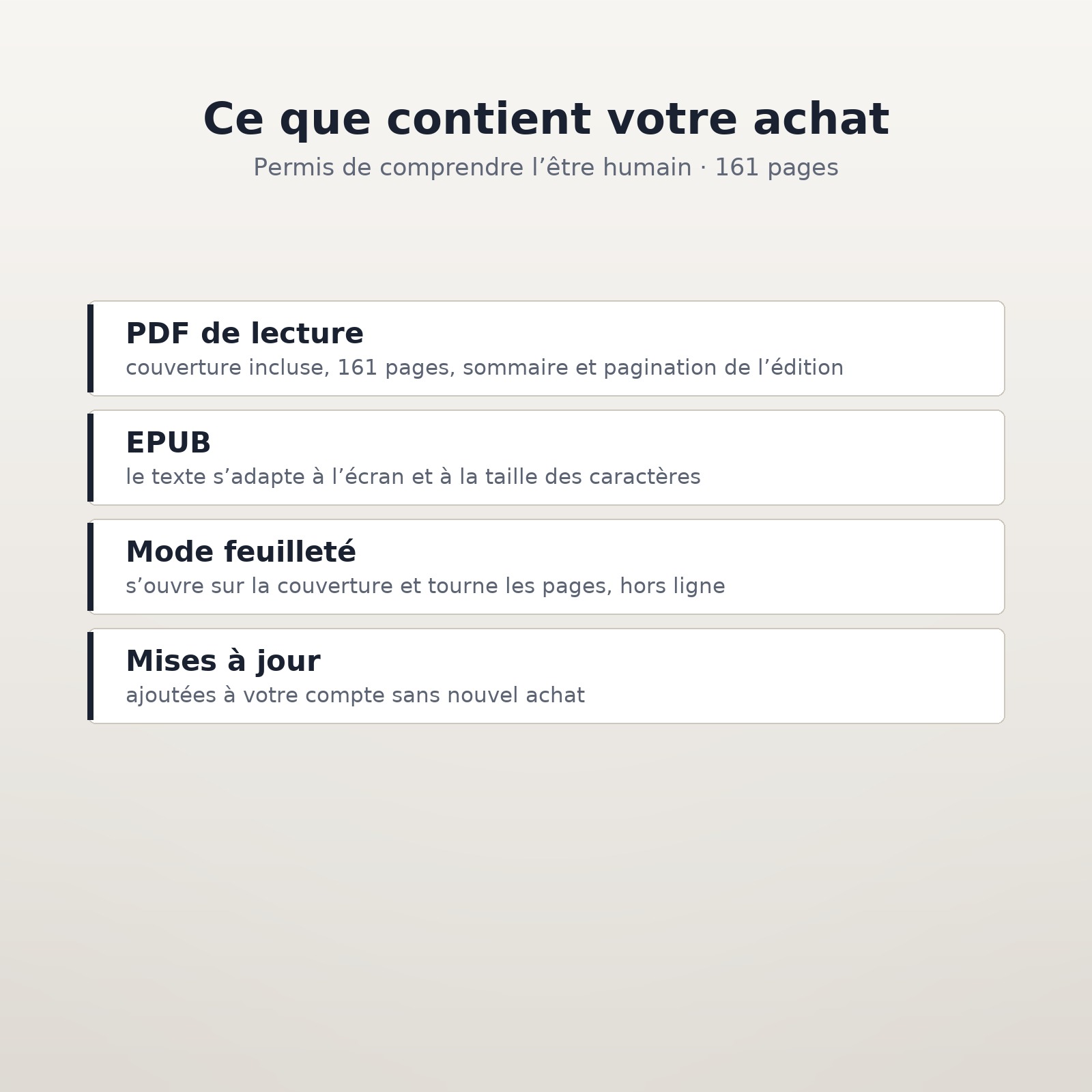
- The complete book in PDF : 20 chapters and 5 appendices, 161 pages, table of contents and bookmarks.
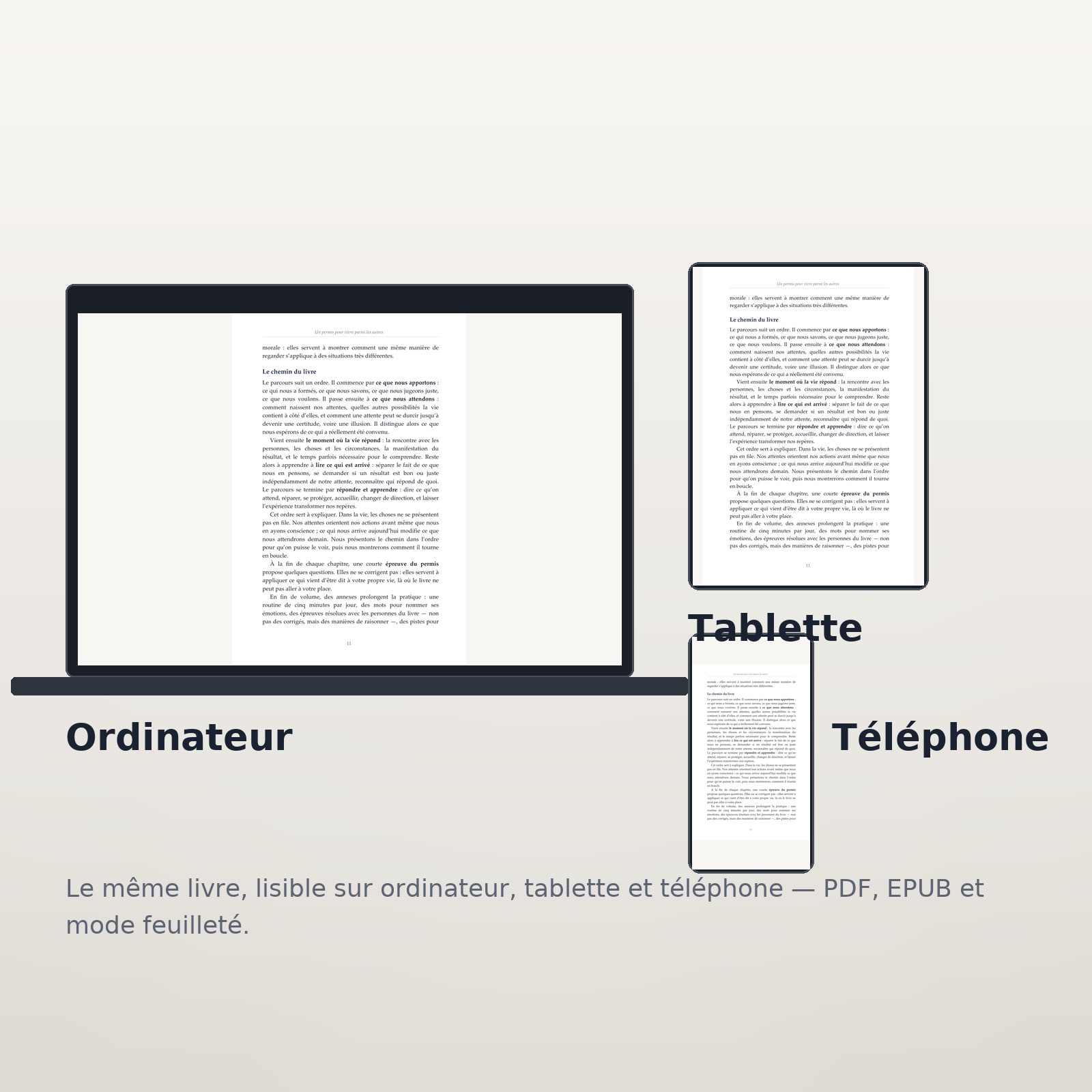
- The EPUB : for e-reader, tablet and phone, validated with EPUBCheck.
- The page-turning edition : the book that turns page by page, in your browser, offline, with a fixed-layout EPUB version.
- The exercises : 20 practical tests and 5 worked tests, built into the book.
- Pas encore incluse — la version audio : le livre lu, chapitre par chapitre, est en préparation. Elle ne fait pas partie des fichiers téléchargeables aujourd’hui ; elle sera ajoutée à votre compte dès qu’elle sera prête, sans supplément.
- The 20 educational videos : one per chapter, with the central idea, an example and a guided test (ZIP file, with subtitles).
Immediate digital access after payment : the files appear in your account, under “My downloads”, as soon as the order is confirmed.
Educational book by Souleymane Ismaël. The people and situations mentioned are typical situations, invented for the purpose of explanation. It does not replace medical, psychological or legal advice, or an emergency service.
Guide gratuit : Comment comprendre les autres : une méthode en cinq temps — ou tous nos guides par thème.









Reviews
There are no reviews yet.